
About
UpBoundAdmin2025-12-08T12:22:19+00:00About Grown by Lightning Hollows
Our story
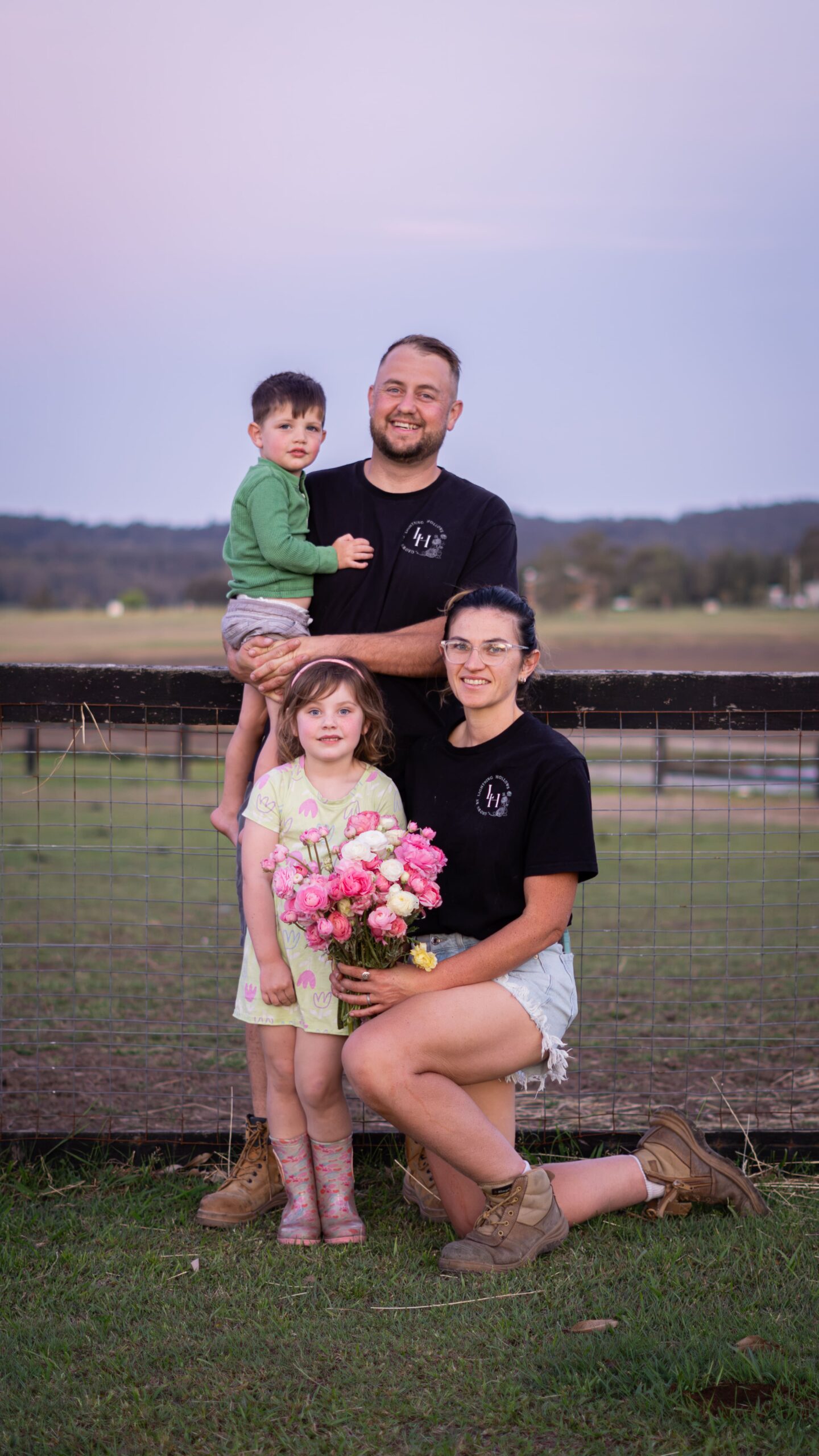
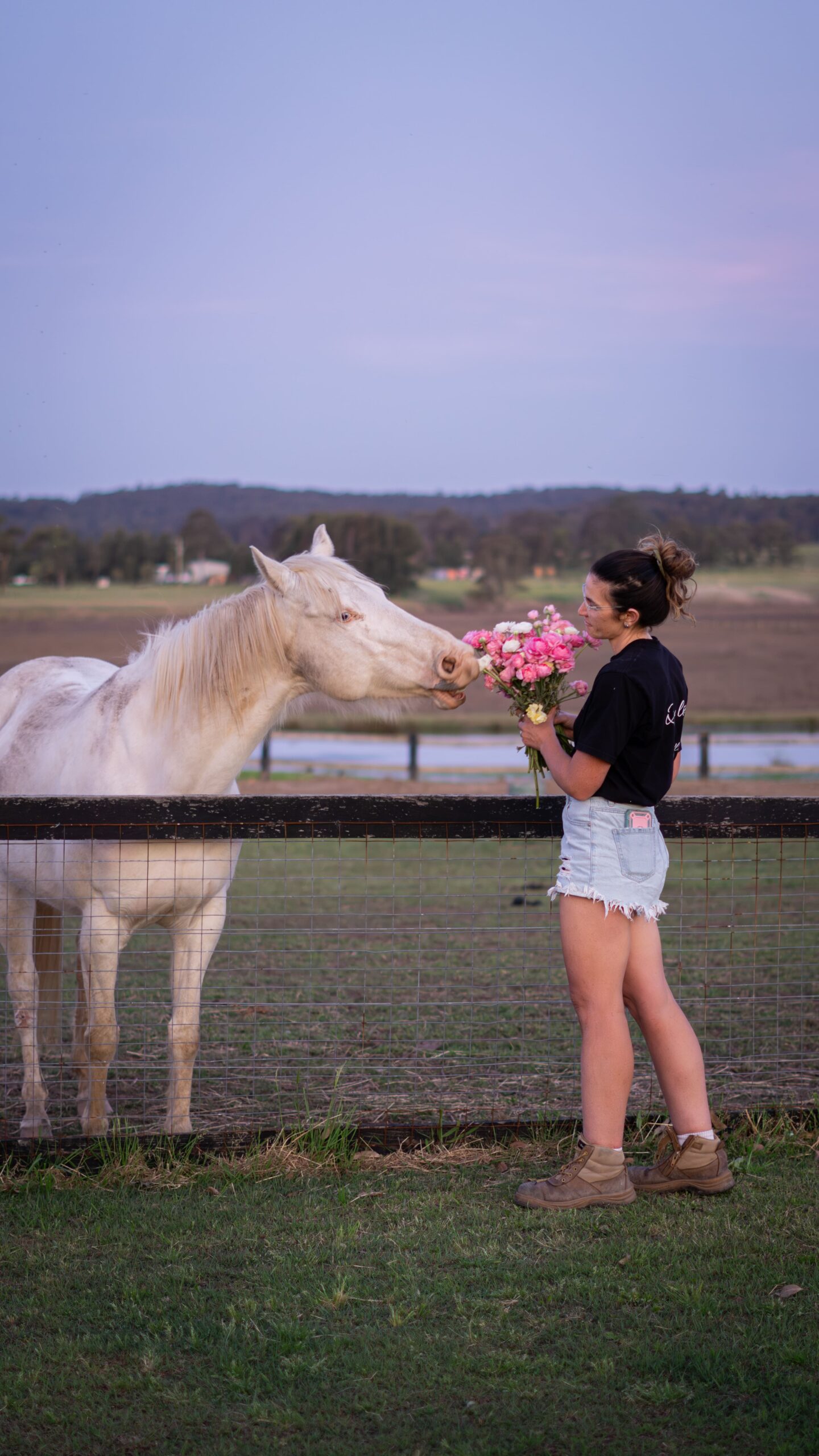
What began as a personal project to honour a much-loved horse named Lightning has grown into a flourishing flower farm. Katie planted flowers to beautify Lightning’s burial site, and in the process discovered a deep passion for growing and sharing blooms. That hobby became a business in December 2022, and Lightning Hollows has since focused on cultivating specialty flowers that celebrate the seasons and support local floristry.
Over the years we have built a supportive local community which allows our blooms to bring joy across the Hunter region. Katie loves the creativity involved in planning a productive flower field as well designing bouquets. Between family life juggling the kids, and working part-time, you’ll often spot her out in the flower field with a head torch harvesting after the kids are in bed. Katie began our garden with the vision of growing veggies before the flowers took over. Currently Ian is working to reignite the veggies here at Lightning Hollows. He has been roped in to the flowers as well and works in ag machinery so he’s a great asset to the business.
Following along with our journey on social media you’ll often see the other farm members making an appearance. From the horses behind us originally moving to the farm to our flock of Orpingtons that assist out with insect control and fertilising.
Mission
At Grown by Lightning Hollows, we are dedicated to cultivating the most beautiful and healthy flowers through regenerative farming practices. By focusing on soil health, nurturing biodiversity, and minimising our environmental impact, we produce vibrant, seasonal blooms that delight our local community and support florists across the Hunter Valley. Our commitment to sustainability ensures that every stem we grow not only enhances your space but also contributes positively to the planet.
Regenerative practices, how we farm
We grow with the long-term health of the land in mind. Key practices include:
-
Building and renewing soil with compost, green manures, and minimal tillage.
-
Planting cover crops and diverse flower rotations to increase resilience and reduce disease.
-
Creating pollinator habitat strips and flowering borders to support bees, butterflies and beneficial insects.
-
Reducing synthetic inputs and prioritising organic amendments.
-
Caring for water with efficient irrigation and mulch to conserve moisture.
These steps not only produce healthier plants and richer blooms; they restore soil life and strengthen the farm’s ecosystem for future seasons.
